Why quality road furniture is essential for a successful highway InvIT
India’s highway monetisation programme has created a significant opportunity for Infrastructure Investment Trusts (InvITs) to deliver sustainable returns from operational road assets. While pavement quality, traffic growth and toll revenue remain central to asset performance, the quality of road furniture is an equally important dimension of highway management. It directly influences road safety, commuter confidence, operational reliability and the long-term reputation of an InvIT.
Road furniture: the silent infrastructure of safety
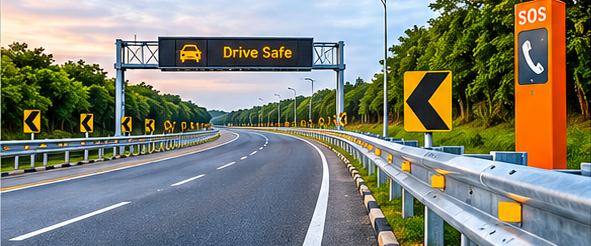
Road furniture encompasses traffic signs, lane markings, reflective road studs, delineators, crash barriers, hazard markers, kilometre stones, lighting and other roadside safety installations. Together, these elements communicate road conditions, guide motorists and reduce the severity of foreseeable hazards. Their effectiveness depends not merely on installation but on correct placement, visibility, durability and regular maintenance.
Creating safer and more predictable journeys
Indian highways accommodate a diverse mix of passenger vehicles, commercial traffic, two-wheelers and, in some locations, pedestrians and local traffic. Clear advance signage, consistent lane markings and reflective delineation are particularly important at junctions, curves, merges, toll approaches and during night-time or adverse weather. Appropriately designed crash barriers and terminals can help mitigate collision severity. A consistent approach to road furniture across assets can reduce driver uncertainty and support safer journeys.
Enhancing commuter experience and asset reputation
Well-maintained signs, legible destination information and clearly marked lanes create a more intuitive travel experience. Conversely, faded markings, damaged barriers and obscured signs can undermine confidence even where pavement quality is excellent. For an InvIT, a recognisable standard of highway upkeep can strengthen public trust and demonstrate responsible stewardship of nationally important infrastructure.
Turning safety infrastructure into long-term value
Protecting financial performance and lifecycle value
Road furniture should be treated as a lifecycle investment rather than a cosmetic expenditure. Preventive maintenance and timely replacement can reduce emergency repairs, repeated mobilisation and exposure to avoidable operational disruptions. Although better road furniture does not automatically increase toll revenue, safer and more reliable operations can support asset resilience, contractual performance and predictable maintenance expenditure, all of which matter to investors.
Standardisation, compliance and accountability
A highway InvIT should establish portfolio-wide performance standards aligned with applicable Indian Roads Congress (IRC) guidelines, Ministry of Road Transport and Highways (MoRTH) specifications, NHAI requirements and the respective concession agreements. Relevant references include IRC:67 for road signs and IRC:35 for road markings, using the applicable editions. Site-specific engineering assessments and road safety audits should guide interventions, with clear responsibilities assigned to project managers and maintenance contractors.
Technology-enabled monitoring and maintenance
A geo-tagged digital inventory of road furniture can provide visibility into location, condition, installation date and maintenance history. Mobile inspections, dashcam imagery and computer vision can help identify missing signs, faded markings and damaged barriers, subject to field verification. Management dashboards should track defect closure time, sign and marking visibility, barrier condition, inspection coverage and repeat defects. Risk-based prioritisation should focus first on safety-critical deficiencies.
A practical operating model for highway InvITs
The Investment Manager should define common quality benchmarks and allocate lifecycle budgets; SPVs and project managers should maintain asset-level inventories, execute inspections and monitor contractor performance. Periodic independent safety audits, day and night inspections, measurable service levels and documented corrective actions can strengthen accountability. Procurement should consider whole-life cost, material quality and performance rather than initial price alone.
Conclusion
A successful highway InvIT must deliver more than a well-paved road. It must provide a safe, predictable and reliable journey while protecting the long-term value of its assets. Investing in quality road furniture, supported by engineering standards, disciplined maintenance and digital monitoring, is a practical way to align commuter welfare, governance, sustainability and investor interests.
“A world-class highway is defined not only by the quality of its pavement, but also by how safely and confidently every road user can navigate it.”
Author Amitav Chakraborty DGM (Maintenance & Safety)
More insights
All insights →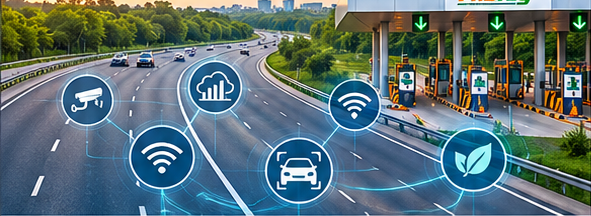 Technology
Digital Transformation in Highway InvITs
Building the future of India’s road infrastructure
Digital transformation is a strategic business imperative for highway InvITs, not merely an IT initiative: from intelligent asset management and toll revenue assurance to AI, safety and ESG.
Biplab Santra DGM (IT & Procurement)